-
[공간] 생명의 응시. mute _ 2000.5Open or CloseMay 18, 2015
SPACE 공간 0005 No.390
생명의 응시. mute
글: 최연숙
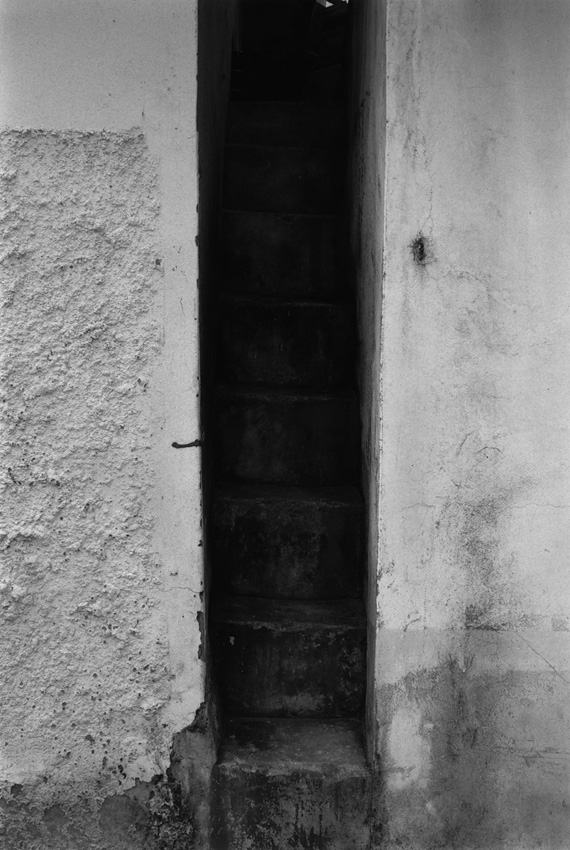
2년 뒤인 오늘, 그는 또 다른 항해를 시작했다. mute 사진집에 실린 정주하씨의 지적처럼 이번 작업은 그 스스로 또 다른 가능성을 찾는 아름다운 위기의 노정이다. 그간의 건축사진에서 익숙해진 그의 작업태도, 즉 아름다운 대상을 향해 그 스스로 빨려 들어가 담담히 그려내는 것이 아닌, 자신의 프레임으로 대상을 끌어오면서 역동적인 움직임의 자세로 그 포맷이 바뀌었다. 건축사진가에게 있어 이는 매우 중요한 사건이다. 이름다운 대상이 있음으로 인해 존재하고 있는 그가 아니라 그것과 무관하게 이미 그 스스로 존재하고 있다는 것을 그는 새롭게 찾은 것이다. 그것이 생명이다.
... 이것들은 사유공간의 경계를 길로 확장하고 있는 공동성의 의미성이 아니라도 그를 비롯한 다수의 건축인들의 시선을 사로잡을 만한 대상들임은 틀림없다. 그러나 그는 그러한 대상에만 머물지 않았다.
... 그렇다면 우리가 발견한 달동네의 아름다움은 거짓이었다는 말인가. 우리가 본 것은 무엇인가. 나는 그 답을 김재경의 사진에서 찾았다. 자기 생명에 대한 강한 인간애, 지극히 본능적인 욕구다. 그것은 자연스러움이다. 아무도 그것을 사치스럽다고 하지 않는다. 그들이 길로 사유영역을 확장하고 그 경계를 무너뜨리고 있는 것은 어쩌면 필연이다. 그런 애정 없이 결코 삶은 아름다울 수 없다.
발췌+출처 : [공간]
-
[한겨레] 올해 가장 빛났던 건축인 11명은? _ 1998.12.8Open or CloseMay 18, 2015
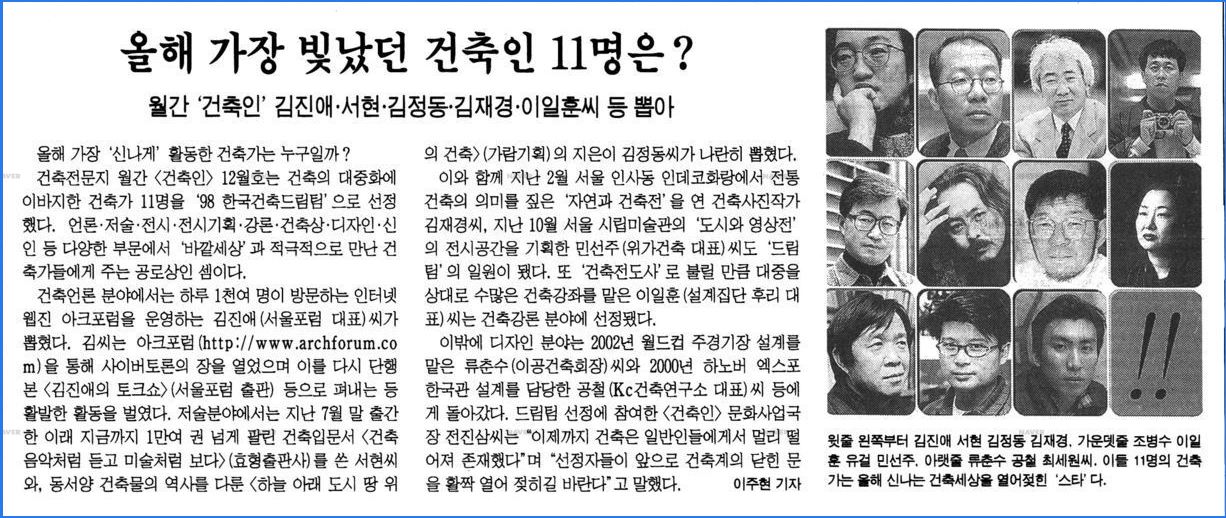
- 월간 ‘건축인’ 김진애, 서현, 김정동, 김재경, 이일훈씨 등 뽑아
- 올해 가장 ‘신나게’ 활동한 건축가는 누구일까?
건축전문지 월간 <건축인> 12월호는 건축의 대중화에 이바지한 건축가 11명을 ‘98 한국건축드림팀’으로 선정했다.
이와 함께 지난 2월 서울 인사동 인데코화랑에서 전통건축의 의미를 짚은 ‘자연과 건축’전을 연 건축사진작가 김재경씨, 지난 10월 서울 시립미술관의 ‘도시와 영상’전의 전시공간을 기획한 민선주(위가건축 대표)시도 ‘드림팀’의 일원이 됐다. 또 ‘건축전도사’불릴 만큼 대중을 상대로 수많은 건축강좌를 맡은 이일훈(설계집단 후리 대표)씨는 건축 강론 분야에 선정됐다.
드림팀 선정에 참여한 <건축인> 문화사업국장 전진삼씨는 “이제까지 건축은 일반인들에게서 멀리 떨어져 존재했다”며 “선정자들이 앞으로 건축계의 닫힌 문을 활짝 열어젖히길 바란다.”고 말했다.
발췌+출처 : [한겨레] 이주현 기자
-
[공간] 예술로서의 건축사진 Nowadays of korean architectural photography _ 1998.3Open or CloseMay 18, 2015
공간 Space _ 9803 No.364
예술로서의 건축사진
Nowadays of korean architectural photogarphy
글: 진동선 / 사진비평
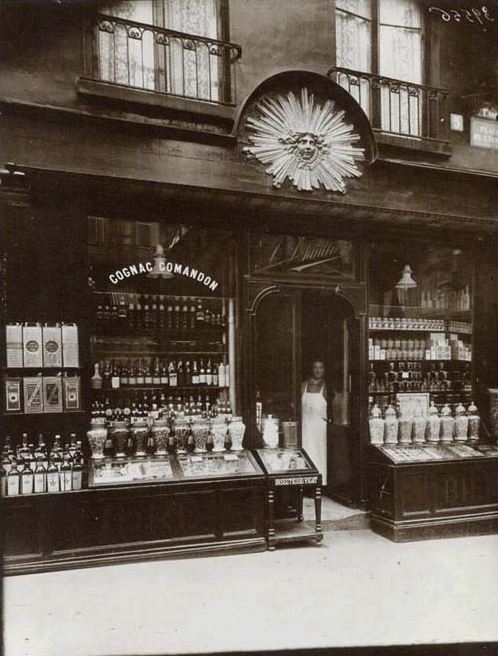
건축사진을 최초로 예술의 영역으로 이끌었던 사람은 금세기 초 프랑스 사진가 으젠느 앗제(Eugene Atget)였다. 앗제 이전에 프레데릭 에반스(Frederic H. Evans)가 있었고, 앗제 사진의 교과서가 되었던 찰스 마르빌(Charles Marville)이 있었지만 160년 사진의 역사가 건축사진의 예술성을 논함에 있어 앗제에 많은 페이지를 할애한 것은 건축사진이 하나의 사진적 장르로서 구축되지 못했음에도 불구하고 그가 건축물의 공간성, 표현성, 관념성을 최초로 일깨웠기 때문이다.
전후(戰後)들어 건축사진에 새로운 지평을 연 사람은 퍼스널 다큐멘터리 사진가로 잘 알려진 데니 라이온(Danny Lyon)과 브루스 데이빗슨(Bruce Davidson)이다. 이들 미국사진가들은 .... 바로 이때부터 건축사진은 인간의 삶과 연계한 사회적 다큐멘터리의 일부분으로서의 자리잡아 나갔다.
1970년대 건축사진의 또다른 특징은 사진사에서 처음으로 건축사진에 대한 미학적 담론이 생산되었다는 사실이다 .... 동시대 건축물에 대한 시대성, 텍스트로서의 사회성, 그리고 미학적 코드로서의 유형성이 특히 강조되었다.
한국 건축사진의 현 단계
배병우의 "종묘" 시리즈는 역사성과 예술성이 돋보인 수작이라 할 만 하고, 최근 전시를 가진 김태오의 "건축에서의 풍경(Landscape in Architecture)"은 독특한 형식성과 미학성이 돋보인 사진이며, 고건축에 대해 남다른 감각과 뛰어난 해석을 보인 김재경의 최근 작품 "자연과 건축(Nature and Architecture)"은 절제된 심미성이 돋보이는 뛰어난 건축사진이다. 이밖에도 건축사진을 염두에 두지는 않지만 그 맥락이 도시적 이데올로기에서부터 사회적 에꼴로지에 이르기까지 폭넓은 미학적 카테고리를 제공하는 순수 사진가들의 건축사진들도 만날 수가 있는데 홍일, 김대수, 김영길 등의 사진이 대표작이다.
1997년 제 2회 광주비엔날레 "공간(Space)"전(커미셔너 박경)은 건축사진에 대한 일반 인식을 과감하게 깨뜨린 하나의 사건으로 기록될만 하다. 건축사진으로 채워진 "공간"전은 건축사진이 이데올로기 극단까지도 확장될 수 있다는 양식의 무한성을 보여주었다. ... 광주를 찍은 하성읍과 김혜선, 그리고 서울을 찍은 임정의, 민선주, 신지철의 작품들도 훌륭했다. 특히 신지철의 사진"地區의 추억중에서"는 건축사진에서는 보기 힘든 텍스트 기법을 도입했는데 이는 흔치 않은 일로써 건축사진에서 결여되기 쉬운 이데올로기를 텍스트를 통해 극대화 했다는 점에서 주목할 만한 양식이었다.
... 따라서 건축사진이 순수사진의 한 지류로서 예술적 영역에 있는 한, 미학적 규범을 충실히 따르지 않을 수 없다. 그 규범은 건축물 자체에 있는 것이 아니라 그것을 둘러싸고 있는 사회와 그것을 찍는 사진가의 철학과 사상에 달려있음을 사진의 역사가 증명하고 있다.
발췌+출처 : [공간]
-
"It is like the moment of silence between two notes of music." _ Richard D. ZakiaOpen or CloseMay 18, 2015
Dong-A gallery 1998.4.17~30
Earth. House. Space
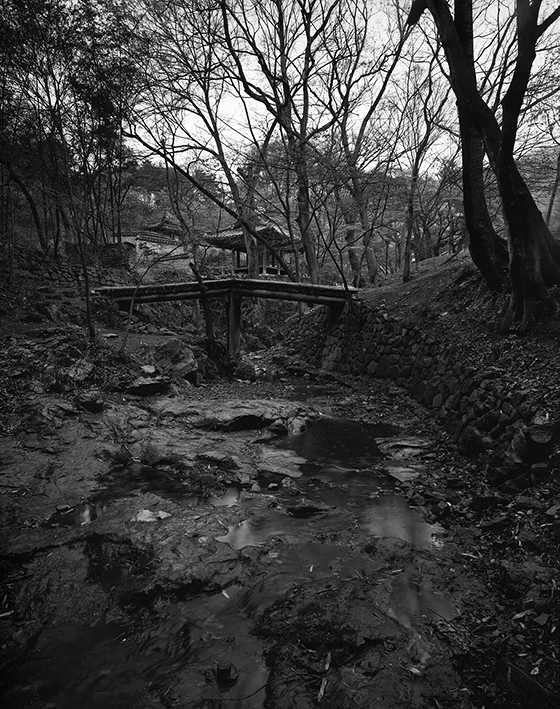
"Thanks for sending Kim's catalogue of work. The technical quality of his black and white prints must be outstanding based on the reproduction I saw. They are marvelous images and reflect the serenity, softness and quietness in nature if one takes time and has the eye and heart (as Kim does) to capture the moment. It is like the moment of silence between two notes of music. One has to listen carefully to hear the silence and one has to look carefully and quietly to capture the silence in nature. The homes, landscape and temples reminded me of my days in Okinawa as the war was ending. I was too young at the time(19 years old) to appreciate the quiet beauty of the landscape then but not too young to appreciate it in Kim's work. Please convey my respects and admiration for his work."
Richard D. Zakia : Chairman, Fine Art Photography Department, Rochester Institute of Technology / A specialist in the science of sensitometrist
-
THE RURAL IMAGE / Nature & Architecture Hereford museum & art gallery. England _ 1998.9.12~10.17Open or CloseMay 18, 2015
THE RURAL IMAGE / Nature & Architecture
Hereford museum & art gallery. 1998 Herefordshire Photo Festival. 1998.9.12~10.17
The Rural Image
Each morning I walk my dogs through the local fields and up Perrystone Hill, in the south east corner of Herefordshire between Rose-on-Wye and Ledbury. It is one of the highest points between the Black Mountains and the Malverns. From the top I can see the Cotwolds, the Forest of Dean and all the way to Hay Bluff in the far north west of Herefordshire, if I am lucky with the weather. I can see the fertile farmlands of Herefordshire and the bleaker tops of the Malverns and the Black Mountains. Views such as this are part of the rural scene and considered to be beautiful, but I frequently wonder to myself what it is that we respond to in the countryside to make us think of as beautiful. What in our experience or instincts does it appeal to? Does the same apply to the rural lifestyle, as it perceive it,or is it only the backdrop that attracts?
Where does photographing the rural image become pure landscape? Is landscape part of the rural image? Of course it is, but rural must mean more than just the landscape, maybe it's a way of life lived in that appealing landscape that we respond to so basically. The landscape itself is almost completely man-created; we cleared the forests and planted the fields; we created the patterns of the countryside as a sort of open air factory for the production of our food; we created the farm buildings and cottages from the available natural resources. The countryside has also, since at least the end of the seventeenth century, become more and more of a "natural" theme park, where the tired and cynical from the cities can refresh their eyes and minds. But like all theme parks, it is based on a perception, not the reality - the visitors don't want to get up at four in the morning in the winter and wade through the muck.
The "Rural Image" has in the past tried to capture an idyllic way in which the locals are living the good life. This good life - simple, hard physical work, recycling everything possible, whole food, changing seasonally but fundamentally unchanging, communing with nature. This is about the endless renewal of the generations; of passing things along a long line of family history; of continuing association with a location and its traditions. These are entrenched icons of our consciousness about how we would want to live - there is deep seated longing for such a way of life in many of us. Where we are part of the community, know our neighbours and "belong", other than the anonymity of the urban environment. They are earthy, fertile, deep rooted(any more cliches?) aspects of our psyche that, even as citydwellers, we wish we could hang on to.
Although some of the early photographic workers did show the hardships, it was as if there was a nobility of sorts in the rural poverty - they were more interested in the textures and characters of the rural scene, as picturesque compositions in the pictorial tradition of painting. In Britain the 19th century work of George Davison(incidentally an Englishman who became very wealthy as a result of his founding investment in Eastman/Kodak), Francis Frith, Peter Henry Emerson, Henry Peach Robinson, Benjamin Stone and Frank Meadow Sutcliffe all into this catagory, even though works such as Emerson took as "naturalistic" approach as possible. The same approaches really applied to the ethnic work on Indian communities in the USA, such as the work by Curtis and Vroman, and travel photography generally where it addressed the local rural communities.
Capturing the harder edge of rural reality, however, hardly happened until much later, and not in Britain. This was either mainly as a result of some disaster addressed by the photojournalists (such as the classic work of Dorothea Lange, Russell Lee, Arthur Rothstein, Walker Evans for the Farm Security Administration in the USA in the dust bowl depression period (1935-1943), or more lately by photographers interested in an alternative to the traditional landscape and rural idyll approach to the countryside. A good example of this are the haunting images by Susan Lipper of the Community of Grapevine Hollow in West Virginia, USA (1988-93). These show not just the Poorness of the people, but also the poverty of their lives against the natural beauty of the landscape. As well as the hidden social issues of the modern rural life, there are now an increasing number of other real issues that affect the whole community, such as the way in which farmers treat the environment and the animals in the name of our food production or for medical research.
Are there photographers addressing these issues of the rural life now, or are the real issues in the rural context too hidden in the scale of the landscape and people's continuing attachment to the rural idyll? Photographers address the issues that strongly interest them or earn their daily bread. In the urban context there is a continuing stream of photographers making their reputations on the hard issues and the surreal aspects of the urban environment, but where is the equivalent of "street photography" of the rural scene? In the Herefordshire photo Festival we have attempted in the past to address some of the issues of concern in our rural society, but there is still some way to really get them onto the agendas of the rest of the photographic community. In this year's Festival we have attempted to find some photographers who have something interesting to say about the nature, the countryside and country way of life. Here at the Hereford Art Gallery we have the work of four photographers addressing different issues, but all related to the rural/country environment and how we respond to it, as well as some examples of the Victorian view of the rural image.
Kim jae-kyeong "Nature and Architecture"
Kim jae-kyeong is a Korean architectural photographer whose work on traditional Korean country buildings, "Nature and Architecture", is one attempt to show how a rural heritage might be affected by modern life. I first saw these images in the Indeco Gallery in Seoul, the capital of South Korea. The gallery is located in an area of Seoul called Insadong, which is a wonderful combination of the traditional art supplies shops, art galleries, antique shops and street antiques stalls, where the relationship of Kim's work to the traditional images and artefacts of Korean culture was strong.
His sumptuous images show the traditional materials of the Korean rural homes and agricultural buildings, in the context of the landscape. He may be pandering to the Golden Age heresy that things were always better in the (mainly rural) past. But the farmers did not have any other materials for their buildings; construction techniques were simple but effective - they worked with what they had to hand. Nevertheless there is a very real coincidence of form and texture between the buildings and their environment. This is a way in which we can be sure that we are not despoiling the environment by using such materials and constructions - there is little difference between the human constructions and their milieu. From a conservation point of view it doesn't matter when the humans leave - nature will reclaim its own. How can this be said of the grey concrete, plastic and black corrugated iron constructions of our modern farms?
Robert Ashby : Chairman, Herefordshire Photo Festival 1998. England
-
[건축인 POAR] 사진 속에 나타난 건축의 일루젼 _ 1998.3Open or CloseMay 18, 2015
Re-View 건축인 POAR 9803 No.025
김재경<자연과 건축>인데코/2.2-14 & 김태오<건축 속의 풍경>후지포토/2.9-14
사진 속에 나타난 건축의 일루젼
글: 이진희
인데코 화랑에서 2번째 개인전을 가진 김재경의 "자연과 건축"전은 그가 수동기사 출신이라는 점에서가 출발점이다. 김재경에게는 사진을 전공하지 않았다는 것이 그리 중요하지 않다. 그는 현상소에서 9년간 일한 경험이 있으며 그 후 건축 잡지의 사진기자로 활동하며 프레임 속에서 감정 전달에 따라 찍혀 나오는 매개체가 어떻게 보여지는지를 배웠다.
작가는 지역적인 영향을 받기 마련인데 우리가 한국의 풍토, 기후, 문화 속에서 자라나서 서양문화에 관심을 갖는다는 것은 우리와는 다르게 세계를 해석하고 바라보는 것을 알아보고 참조하는 것에 불과하다는 것이다. 그는 이것을 통해 한국적인 건축과 건축적인 사진을 설명하고 있다.
후지포토살롱에서 보여진 김태오展은 작가가 건축물을 자료를 통해 보는 것에서 보다 벗어나 공간과 자연 기운의 관계 속에서 작품세계를 설정하고 있다. 공간을 저쪽 한 편에 두고 자연을 강조해서는 안되고 또 자연을 강조하면서 자연을 한 편으로 밀쳐놓아서도 안 되는 서로 동등한 관계를 유지하면서 그 관계성을 설정하려는 것이 그의 사진이다.
그의 사진에서 공간성 못지않은 중요한 팩터로서 기능하고 있는 것이 색체이다. 인위적으로 만든 빛은 아니지만 무척이나 세련된 색체를 잡아내는 그의 사진은 건축을 미적으로 접근하기에 건축사진에서 사진과 건축을 동시에 전공한 적격의 인물이라는 결론을 갖게 한다.
발췌+출처 : [건축인 POAR]
-
[건축과 환경] 자연과 건축 김재경 사진전 _ 9803Open or CloseMay 18, 2015
자연과 건축 - 김재경 사진전
관람객들의 높은 호응 속에 연장전이 마련되기도 한 이 전시회를, 본지는 한 평범한 건축인의 눈을 통해 조명해 보았다. < 글 / 정효정 기자 >
김재경 사진전 "자연과 건축"을 보고
글: 이건섭 / 건축가
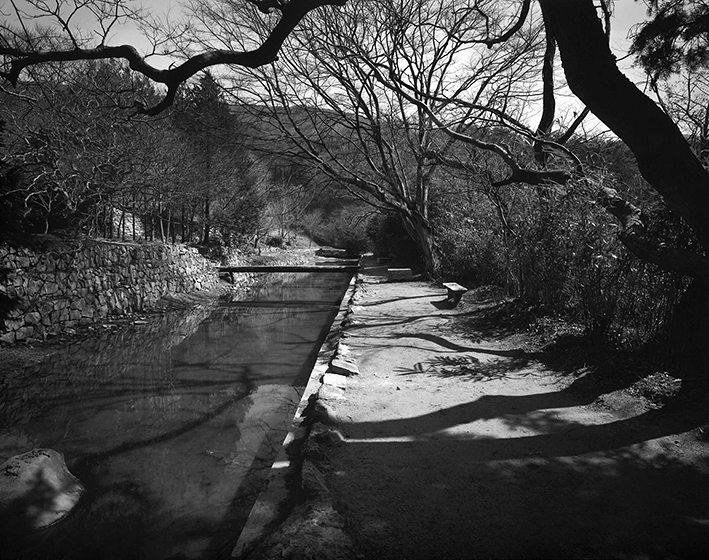
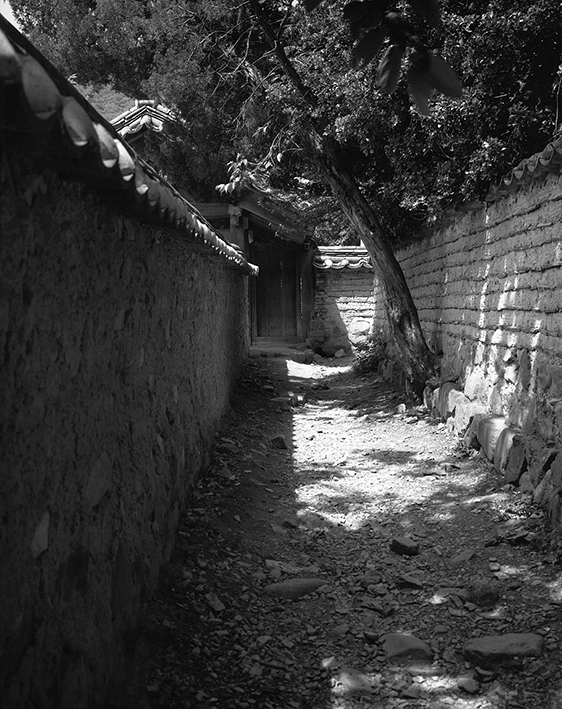
도입은 단순하다. 첫 번째 사진은 개심사 통나무 다리로부터 시작한다. 다리 밑 수면의 고요함과 옆길의 적막함은 우리를 이 답답한 세상 저 너머의 선계에라도 인도하는 것 같은 그야말로 이속(離俗)의 경지를 열어 가는 듯 보인다. 이어서 작가는 우리를 전남의 소쇄원 대밭 사이로 인도하고 영풍의 부석사와 윤증고택의 마당을 거쳐 안강 향단(香壇)의 비밀스러운 통로로 유도한다.
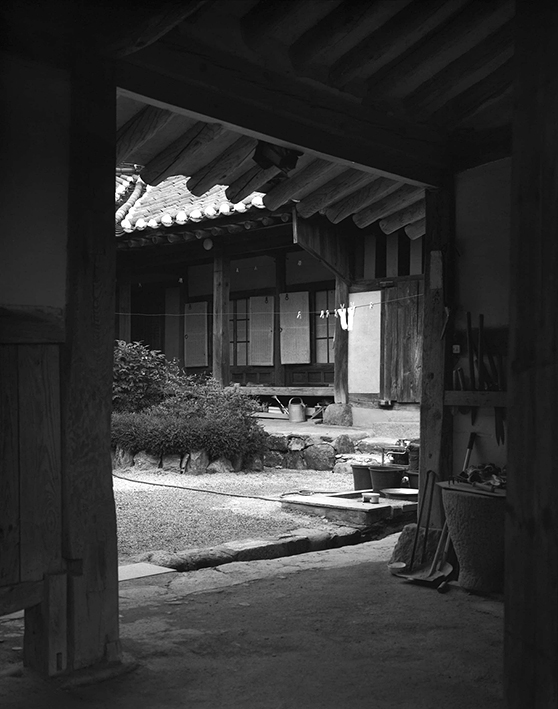
전통마을을 보여준다고 현대생활의 모습을 보여주는 것들을 화면에서 배제하기 위해 텔레비전 안테나까지 철거하면서 사진을 찍는 순수파들의 눈에는 그의 사진이 '완전하지 못한 것'으로 보일지 모른다. 그의 사진에는 선암사 요사체의 백열등이 윤증고택의 빨래 건조대가 드러나 사진 속 공간의 주인을 암시하고 텅 빈 공간의 주인을 기다리는 기대감을 배가시키고 있다. 반면 향단에서는 그런 군더더기 없는 공간이 쓸쓸해 보이고 처량한 느낌을 갖게 되는 것은 문화재로 관리되는 운명의 기구함이라고 할까. 사람 안사는 집은 아무리 깨끗하고 정갈해도 영락없는 귀신집이라던 푸념이 와 닿기만 한다.
사진전은 계속 의도적으로 배제되던 사람 -한 스님이 개심사 안양루 옆의 좁은 길을 따라 해우소(解優所) 쪽으로 걸어가고 있는 것으로 끝난다. 서방정토를 그리며 가는 것인지 사진가는 말이 없고 사진 속 스님도 설명해주지 않는다.
발췌+출처 : [건축과 환경]
-
.........Photos show Korean nature, architecture < THE KOREA HERALD, FRIDAY, FEBRUARY 13, 1998 >Open or CloseMay 18, 2015
Nature And Architecture / Indeco gallery 1998.2.2~2.14
.........Photos show Korean nature, architecture < THE KOREA HERALD, FRIDAY, FEBRUARY 13, 1998 >
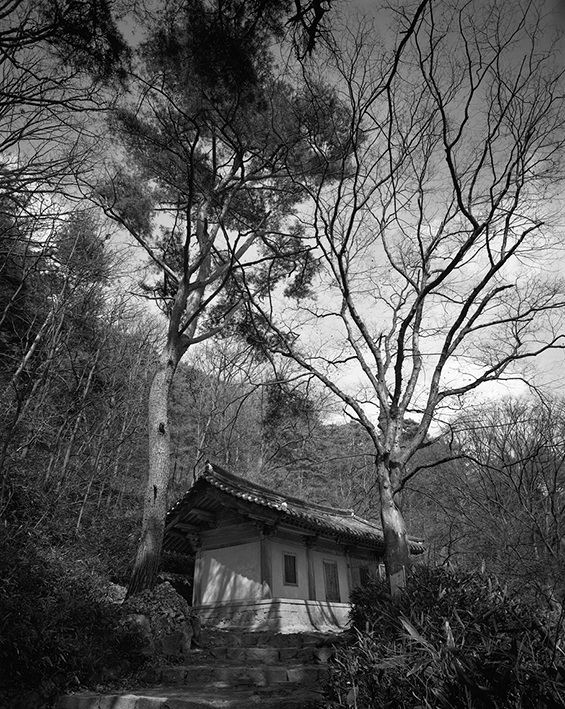
For photographer Kim Jae-kyeong, nature and architecture have been the prime source of his pictures. People, therefore,are rarely found in his photographic world. During his over 10 year career as a professional photographer, Kim has devoted himself to taking pictures of nature and architecture across the nation. Kim has recently published a book of his wide(8*10 inches), black and white photographs, and they are on display at a Seoul gallery. The exhibition of Kim's photographs, now under way at Indeco Gallery, is to run till Saturday.
Kim's pictures portray traditional Korean houses and other types of architecture which are in harmony with the surrounding landscape. Architect Kim Young-sub comments, "Looking deeply into Kim's black and white pictures, we see architecture assimilating to nature, in which our inner voices also seek refuse. His photographs devoid of human presence emits tranquility and loneliness, which enables viewers to transcend the physical world and look far beyond, he says. Hong Mi-sun, a photographer and instructor at Sangmyung University, comments that Kim Jae-kyeong records Korea's traditional architecture in his photographs and reveals how Koreans lived a long time ago. "He provides modern Koreans, who have become accustomed to western-style houses and apartments, with a chance to look back on themselves.
Kim's pictures are also said to show a "neatness" in printing, which can be obtained via contact printing of 8*10 inch photos taken with large format camera. His choice of large format camera was inspired by the works of American photographer Nicolas Nixon who took pictures of the life stiles of Americans in the '70s and '80s. The photographer has been taking pictures of old houses and schools, Buddhist temples, and other types of architecture in Chungchong, Kyongsang and Cholla provinces for almost 10 years. For details, call 02-738-5075.
출처 : [THE KOREA HERALD]
-
.....Photos Capture Nature, Architecture of Korea < THE KOREA TIMES, FRIDAY, FEBRUARY 13, 1998 >Open or CloseMay 18, 2015
Nature And Architecture / Indeco gallery 1998.2.2~2.14
.....Photos Capture Nature, Architecture of Korea < THE KOREA TIMES, FRIDAY, FEBRUARY 13, 1998 >
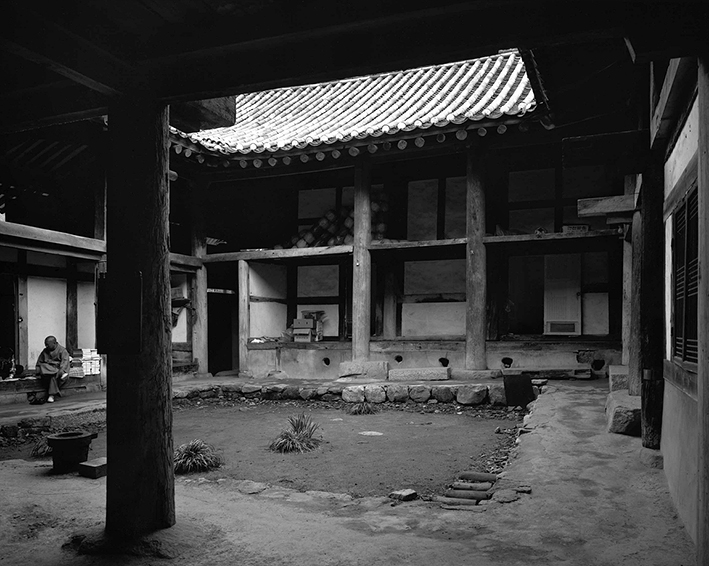
The emptiness of a sunny but barren garden, where nameless seeds lazily float over the roof of a neighboring house where a lonesome stork of some herb hangs to dry, feels all the more empty since there is no trace of man. In the photographic world of Kim Jae-kyeong, humans are not an important subject. The desolate quality of his pictures stems from the absence of human beings. The places he chooses to photograph are devoid of human presence and emit an atmosphere of tranquillity and leaves the things to remain in their natural state. Accordingly, his photographs enable viewers to transcend their physical location and look far ahead.
Kim, 40, has pursued to capture the tranquil beauty of Korea and the subtle harmony coming from nature and traditional architecture for the past five years. Now the exhibition of 35 of his black and white pictures is under way at the Indeco Gallery (738-5075) in Insadong, and will continue until Feb.14. "Looking into KIm's black and white pictures, we see the architecture gradually assimilating to nature, in which our inner voices also seek a lonely refuge", said Kim Young-sub, an architect and critic. There have been pictures of architecture before, but most remained mere graphic documents or, on the other hands, concentrated too heavily on their formal aspects by neglecting to portray the way of life of the people who reside in the living space, reviewed the critic.
His black and white photographs of fine grain are the products of contact printing from 8*10-inch film, made through the lens of his large view camera. The subtle materiality of his objects are the full range of tone gradation are well preserved in black and white, which helps rediscover the golden balance of space and light. "The photographs on display give an idea about our ancestors insight in respecting nature and traditional beauty of Korea to foreigners in particular," said the 40- year-old photographic artist.
출처 : [THE KOREA TIMES]